
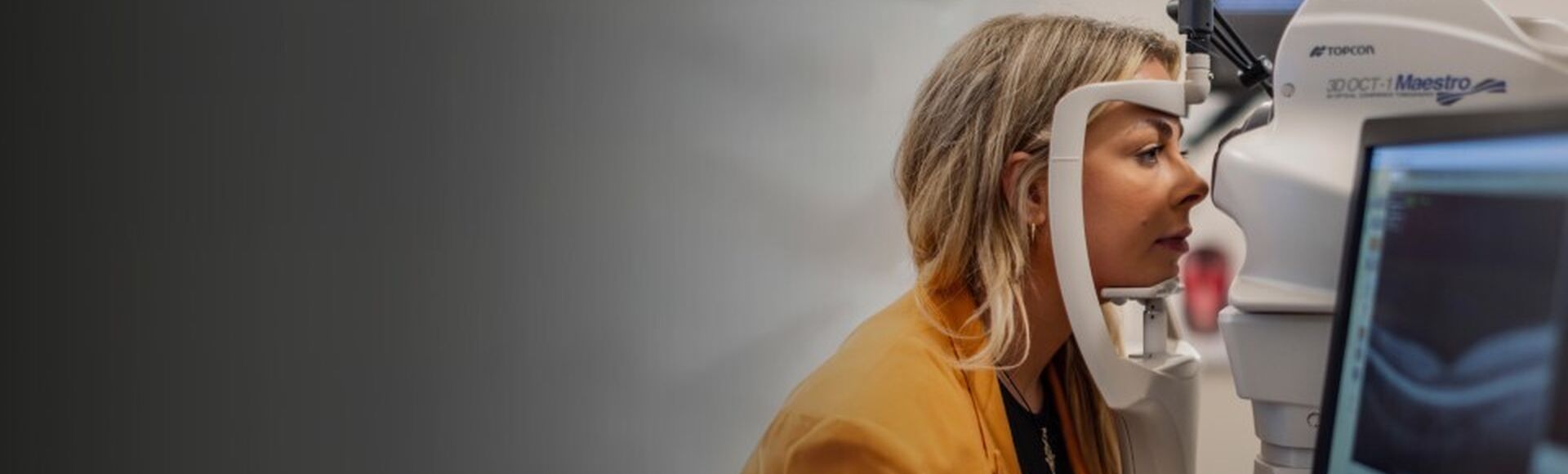
What is an OCT scan?
An OCT scan is a quick, comfortable scan that allows us to look closely at the health of your eyes, not just what’s visible on the surface, but what’s happening underneath.
During a standard eye exam, we can see the surface of the retina. An OCT scan goes a step further by creating a detailed, layered image of the back of your eye. This gives us a much clearer picture of how your eyes are functioning and whether there are any early signs of change. Because OCT shows the eye in such fine detail, it can help us spot problems before you notice any changes to your vision. Conditions such as glaucoma, age related macula degeneration and diabetic eye disease can be detected earlier and in more detail than traditional methods can often begin silently, and OCT allows us to detect and monitor these changes earlier than traditional methods.
The scan itself is non-invasive, painless, and only takes a few minutes. It plays an important role in helping us protect your long-term eye health and give you peace of mind.
What is the difference between an OCT scan and an eye test?
A routine eye test is designed to check both how well you can see and the overall health of your eyes. During your appointment, your optometrist will assess your vision, check your eye pressure, examine the front and back of your eyes, and update your prescription if needed.
An OCT scan is an additional, advanced scan that provides a much more detailed view of the internal structures of the eye particularly the retina and optic nerve. While a standard eye exam allows your optometrist to examine the surface of the back of the eye, an OCT scan shows the eye in fine layers, revealing changes that may not be visible during a traditional eye test.
Why do I need an OCT scan?
An OCT scan provides valuable information about your eye health that isn’t always visible during a standard eye test. Many eye conditions begin deep within the eye and develop gradually, often without affecting your vision at first. By the time symptoms appear, changes may already be advanced.
The detailed images produced by an OCT scan allow your optometrist to detect early signs of eye disease, monitor changes over time and act sooner if needed. This is especially important for conditions such as glaucoma, macular degeneration, and diabetic eye disease, where early diagnosis can help protect your sight.
Who benefits most from an OCT scan?
1. You may be advised to have an OCT scan if you:
2. Are aged 40 or over
3. Have a family history of eye disease
4. Have diabetes or high blood pressure
5. Have been identified as having higher eye pressure and age related macula degeneration
6. Want extra reassurance about your long-term eye health
Even if your vision feels perfectly fine, an OCT scan can still be beneficial. It helps your optometrist build a clearer picture of your eye health and create a more accurate baseline for future comparisons.
At Duncan & Todd, we combine advanced eyecare technology with the expertise of our experienced optometrist to deliver thorough, accurate, and personalised eye examinations. By investing in the latest diagnostic tools and ongoing professional training, we ensure every patient receives exceptional clinical care and greater peace of mind. When you book your next eye test with us, by adding an OCT scan, you will help us and the excellence you deserve.


